
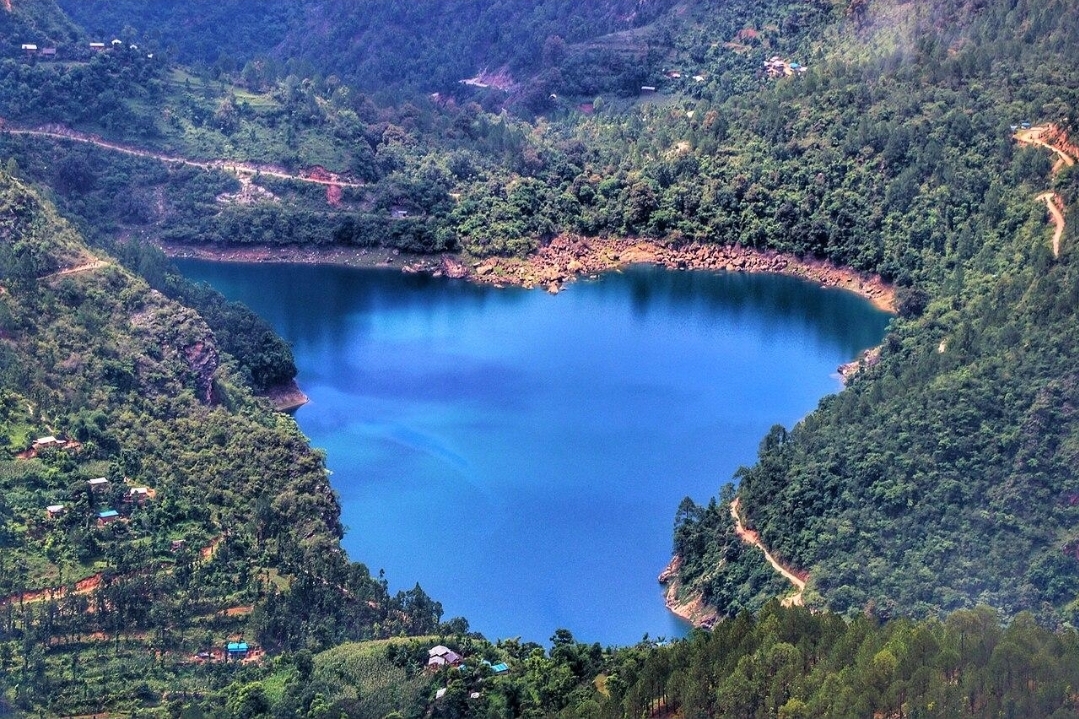
Kupinde Lake. A Natural Treasure of Salyan
Kupinde Lake is one of the largest and most beautiful natural lakes in Karnali Province. It is located in Bangad Kupinde Municipality of Salyan District and is recognised as one of western Nepal's most important tourist attractions. The lake is surrounded by green forests, rolling hills, and rich biodiversity, creating a peaceful environment throughout the year. Its calm water reflects the surrounding landscape, making it a favourite destination for photographers and visitors seeking a quiet escape.
History and Local Beliefs
Kupinde Lake is closely connected with local folklore. According to a popular legend, a settlement once existed where the lake now lies. People believe that after a mysterious event, the land sank and the lake was formed. Although this story is based on local tradition rather than scientific evidence, it remains an important part of the area's cultural identity.
Natural Beauty
The lake changes its appearance with the seasons. During the monsoon, the surrounding hills become lush green, while autumn offers clear skies and spectacular reflections on the water. The peaceful atmosphere makes it an excellent place for relaxation and nature photography.
Tourism Activities
Visitors can enjoy boating, photography, sightseeing, short walks around the lake, bird watching, and exploring the surrounding villages. Local food and culture add to the overall travel experience.
Best Time to Visit
The best time to visit Kupinde Lake is from September to November and from March to May, when the weather is pleasant and the scenery is at its best.
HOW TO REACH
Kupinde Lake can be reached by road from Salyan Khalanga, Surkhet, Nepalgunj, and other nearby districts. Private vehicles and public buses operate on routes connecting the area.
Importance for Local Tourism
The lake plays an important role in promoting tourism and supporting local businesses, including hotels, homestays, restaurants, transportation services, and small enterprises. Continued conservation and responsible tourism can help preserve this natural attraction for future generations.