
World NewsJuly 8, 2026 5 min read 38 views
How Burkina Faso Is Building a 332-KM Expressway With Its Own Money
Burkina Faso is drawing global attention for self-financing a 332-km expressway and expanding Ouagadougou's roads, ring roads and overpasses, largely through domestic revenue rather than foreign loans.
Introduction
A landlocked West African nation once known more for its infrastructure struggles than its ambition is now making global headlines for the opposite reason. Burkina Faso has launched one of the most talked-about road projects on the continent: a 332-kilometre expressway connecting its two largest cities, built largely with the country's own money. Under President Ibrahim Traoré's "Faso Mêbo" initiative, the government says this is only the beginning of a broader push to modernise transport, strengthen trade routes, and improve life in the capital, Ouagadougou. Here's what's actually happening, and why people are calling it a rare example of "infrastructure sovereignty."
The Ouagadougou-Bobo-Dioulasso Expressway
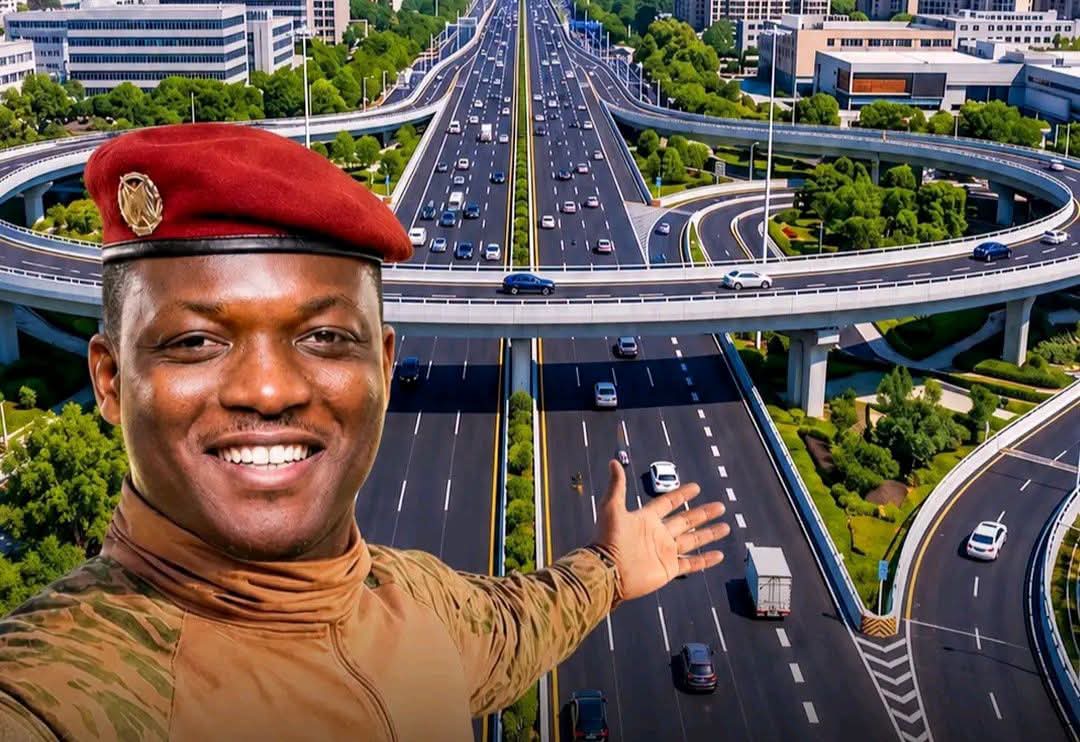
The centerpiece of this drive is the Ouagadougou-Bobo-Dioulasso expressway, officially launched on December 16, 2025, in Yimdi. Once complete, the 332-km, eight-lane highway will connect Ouagadougou, the political capital, with Bobo-Dioulasso, the country's commercial hub and a key gateway to coastal markets in the region. The design includes nine two-level interchanges, 28 overpasses, and an underpass at the entrance to Bobo-Dioulasso, with sections outside urban areas built to support speeds up to 140 km/h.
President Traoré said the project would be financed entirely from state resources, with nearly CFA200 billion (about $357 million) set aside in the 2026 national budget. Reports indicate the funding draws in part on increased state capture of gold revenue, a notable shift for a country that has historically relied on foreign loans and contractors for major infrastructure. The government has also bypassed traditional contractor-led procurement, instead training young Burkinabe workers to operate machinery and take part directly in construction, which has allowed early sections of the route to be cleared at an unusually fast pace.
A Wider National Strategy
The expressway is not a standalone project. Authorities have signaled plans to build similar highways connecting all of the country's regional capitals, part of a longer-term vision for integrated national mobility. This shift has already reshaped other projects: the Koudougou-Yako road, originally planned as a standard two-lane route, has been redesigned as a dual carriageway to fit the new strategy. Once finished, the corridor is also expected to improve Burkina Faso's trade access to coastal ports such as Abidjan, Lomé, Tema, and Cotonou, which matters greatly for a landlocked country that depends on neighboring Côte d'Ivoire and Ghana for sea access.
Urban Infrastructure Growth in Ouagadougou
Alongside the national highway push, the capital itself is seeing visible upgrades. In May 2026, Burkina Faso inaugurated 22 kilometres of new urban roads in Ouagadougou, a $71 million project financed through partnerships with the West African Development Bank (BOAD) and Vista Bank. The program includes the Northern Ring Road, new avenues, interchanges, and access roads to key government and security facilities. Officials say the goal is to ease traffic congestion, reduce accident risk, and improve access to public services across the city. Separately, various solar-powered street lighting projects have been rolled out in parts of the country in recent years as part of wider efforts to improve nighttime safety and reduce dependence on an already strained power grid.
Why This Matters
For a country with a historically low infrastructure score, roughly 3,000 km of paved roads built over six decades, according to African Development Bank data, this level of investment marks a significant shift. Officials argue the projects will lower transport costs, strengthen domestic trade, and improve national security and regional connectivity by making it easier to move people, goods and security forces across Burkinabe territory. Analysts note, however, that the true test will be long-term execution: maintaining construction quality, managing costs responsibly, and sustaining maintenance once the initial building phase is over, particularly given the security pressures the country continues to face in parts of the Sahel.
Tips for Understanding This Story
Distinguish between the flagship national expressway (state-funded, gold-revenue linked) and smaller urban or donor-financed projects (like the BOAD/Vista Bank-backed Ouagadougou roads), since they are financed differently.
Treat cost comparisons with earlier contractor-led estimates carefully; state-led models can look cheaper partly because they skip layers of subcontracting, but may not fully account for long-term maintenance costs.
Watch for updates on the wider "connect all regional capitals" plan, since that is where the long-term impact of this strategy will really be tested.
Common Mistakes to Avoid
Assuming every road project in Burkina Faso is part of the same funding source; some, like the Ouagadougou ring road upgrade, rely on regional development bank financing rather than domestic gold revenue.
Treating early construction speed as proof of long-term project success, without accounting for the maintenance and quality-control challenges that typically emerge later.
Key Takeaways
Burkina Faso is building a 332-km, eight-lane expressway between Ouagadougou and Bobo-Dioulasso, financed mainly through domestic resources including gold revenue.
The project, part of the "Faso Mêbo" initiative under President Ibrahim Traoré, has nearly $357 million earmarked in the 2026 budget.
Ouagadougou is also expanding with a new 22-km urban road package, including a Northern Ring Road, financed through BOAD and Vista Bank.
Officials say the broader goal is to connect all regional capitals by highway and strengthen trade with coastal neighbors like Côte d'Ivoire and Ghana.
Conclusion
Burkina Faso's infrastructure push offers a striking example of a country trying to build its way toward greater self-reliance, funding large-scale projects with domestic resources rather than external debt. Whether this state-led, fast-paced construction model can maintain quality and deliver long-term value remains an open question, but for now, the scale and ambition of the Ouaga-Bobo expressway and Ouagadougou's expanding road network have made Burkina Faso a genuine talking point in conversations about African infrastructure development.
FAQ
Q1: How is Burkina Faso paying for its new expressway?
The government says the project is financed entirely from state resources, with about $357 million (nearly CFA200 billion) set aside in the 2026 national budget, funded in part through increased state capture of gold revenue rather than foreign loans.
Q2: How long is the Ouagadougou-Bobo-Dioulasso expressway?
It runs 332 kilometres and is designed as an eight-lane highway with nine interchanges and 28 overpasses.
Q3: Is Burkina Faso building more highways beyond this one?
Authorities have said they plan to build similar expressways connecting all of the country's regional capitals as part of a longer-term national mobility strategy.
Q4: What is the Faso Mêbo initiative?
Faso Mêbo is President Ibrahim Traoré's broader infrastructure modernisation program, under which the Ouaga-Bobo expressway and related road projects are being developed.
Q5: Is Ouagadougou's ring road part of the same expressway project?
No. The 22-km urban road package in Ouagadougou, including the Northern Ring Road, is a separate project financed through the West African Development Bank (BOAD) and Vista Bank, not the domestic gold-revenue funding used for the national expressway.
What do you think about countries choosing to self-fund major infrastructure instead of relying on foreign loans? Share your thoughts in the comments, and follow HarendraLamsal.name.np for more Africa and world development news.
Related Articles
#Burkina Faso#Ibrahim Traore#Faso Mebo#Ouagadougou#infrastructure development#Africa news#self-funded projects#expressway#Sahel#West Africa